← Back to Portfolio
Internal Tools
Roswell Pro Audio Order & Fulfillment Tools
Roswell Pro Audio15 internal tools · 7 sales channels
PHPMySQLShipStation APIJavaScriptREST APIsShopify API
The operations half of an ongoing solo engagement for a professional microphone manufacturer. (The customer-facing half is the custom mic builder.)
When I started, staff were handwriting serial numbers at the shipping bench and transcribing them into spreadsheets — at exactly the point where an error is most expensive, because a wrong serial breaks warranty lookup for the entire life of the microphone.
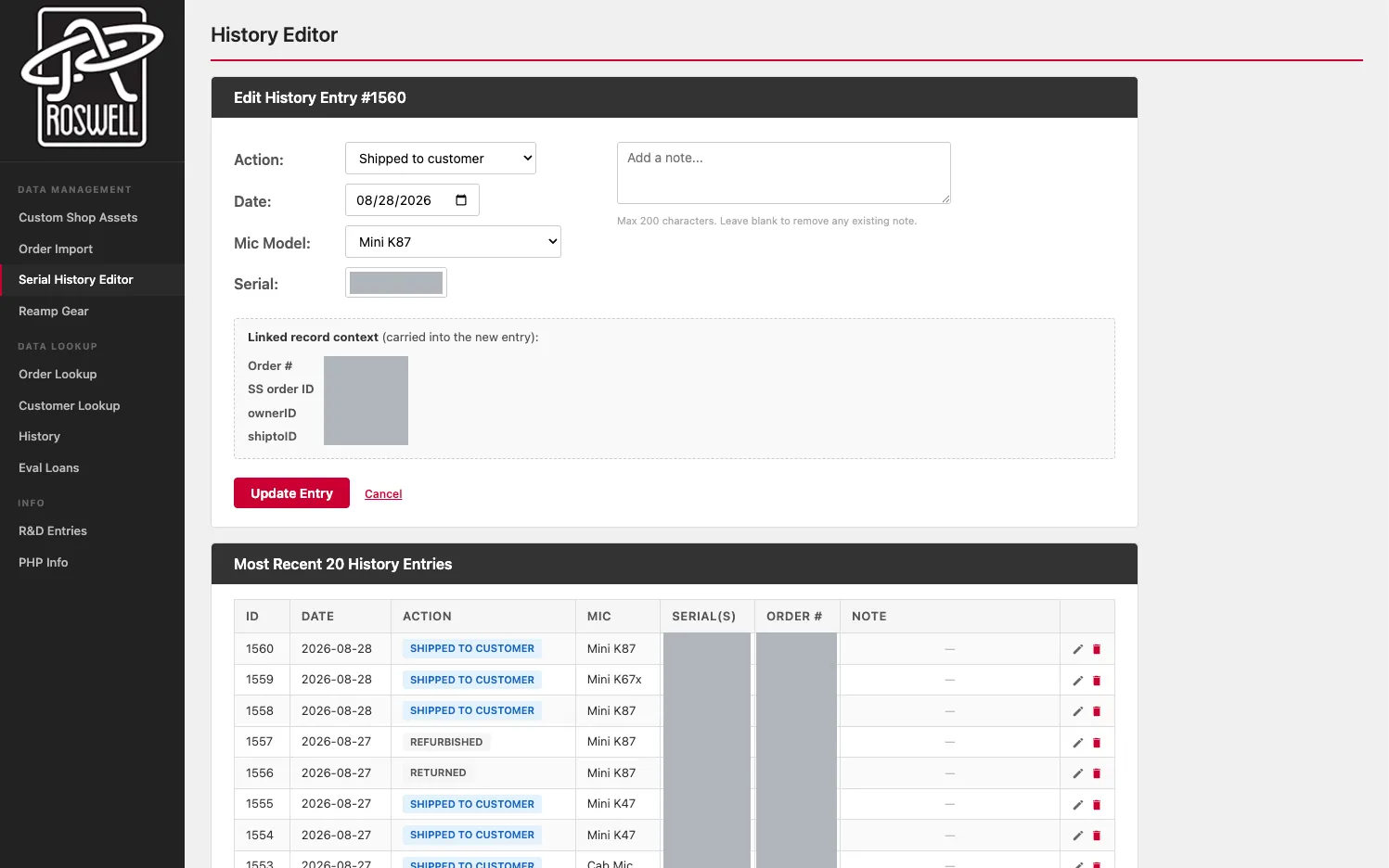
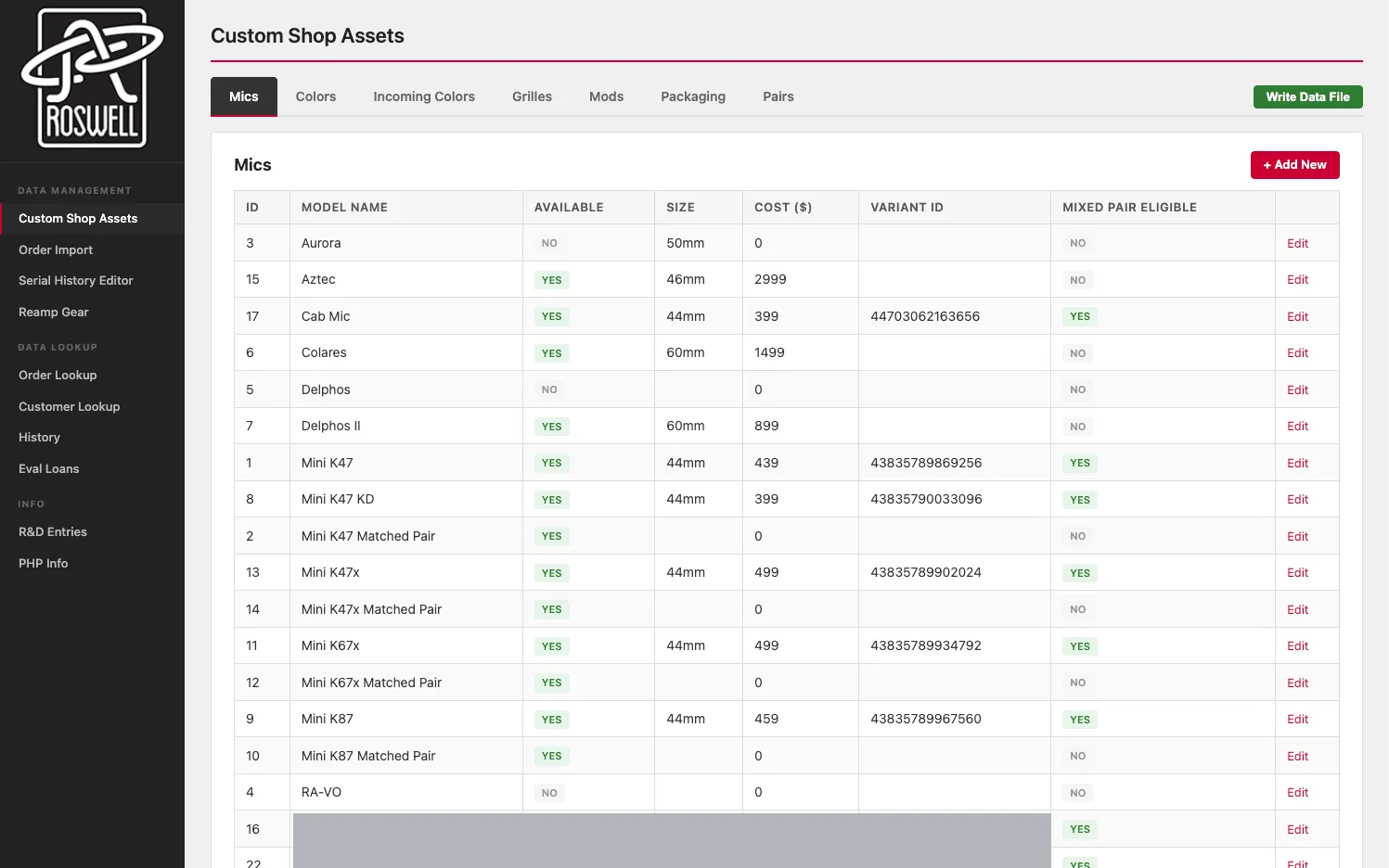
I replaced that with a suite of 15 internal tools (~7,900 lines of PHP against a 20+ table MySQL schema) that pulls the live order from ShipStation across 7 sales channels — Shopify, Amazon, eBay, Reverb, and more — identifies which line items are actually microphones, prompts for serials at the bench, and writes a full lifecycle record. Every mic they build is now a queryable row instead of a line of handwriting.
Most of the real work was the long tail of messy order data that separates a demo from a tool people use every day: Reverb never returns a customer email and the database required one; merged orders delete the number you searched for; cancelled shipping labels zero out a line's quantity so nothing renders; matched pairs arrive as two line items for the same two physical microphones. Each one now has a visible, reversible prompt rather than a silent guess — the governing rule is suggest, never silently expand.
That rule is the whole design philosophy here. Software that quietly corrects messy data on a person's behalf is software they eventually stop trusting, and an operations tool nobody trusts gets replaced by a spreadsheet again.
When I started, staff were handwriting serial numbers at the shipping bench and transcribing them into spreadsheets — at exactly the point where an error is most expensive, because a wrong serial breaks warranty lookup for the entire life of the microphone.
I replaced that with a suite of 15 internal tools (~7,900 lines of PHP against a 20+ table MySQL schema) that pulls the live order from ShipStation across 7 sales channels — Shopify, Amazon, eBay, Reverb, and more — identifies which line items are actually microphones, prompts for serials at the bench, and writes a full lifecycle record. Every mic they build is now a queryable row instead of a line of handwriting.
Most of the real work was the long tail of messy order data that separates a demo from a tool people use every day: Reverb never returns a customer email and the database required one; merged orders delete the number you searched for; cancelled shipping labels zero out a line's quantity so nothing renders; matched pairs arrive as two line items for the same two physical microphones. Each one now has a visible, reversible prompt rather than a silent guess — the governing rule is suggest, never silently expand.
That rule is the whole design philosophy here. Software that quietly corrects messy data on a person's behalf is software they eventually stop trusting, and an operations tool nobody trusts gets replaced by a spreadsheet again.
Screenshots